Prisma Paper #2
Industry 5.0: an industrial and social evolution?
In the light of the publication of the official, full and final text of the decree implementing the Transition 5.0 plan signed by the Minister for Enterprises and Made in Italy Adolfo Urso in agreement with the Minister of Economy and Finance Giancarlo Giorgetti, and that largely follows the last drafts we have read, we confirm the two main innovations emerged in recent days: the expansion of both the figures of certifiers, and the exclusions from the general ban on DNSH regulation (Do No Significant Harm, which states that the interventions considered by the national PNRR will not cause significant damage to the environment. The Transition 5.0 plan is part of the PNRR, precisely Mission 7, and is therefore subject to compliance with this principle).
Without entering into the technicality of the plan itself and the PNRR, it becomes quite obvious how necessary is to distinguish the phases of the two "industrial revolutions" involved, in order to understand how the evolutionary-productive process is a continuum towards a more resilient industry, sustainable and human-centred.
Definition of Industry 4.0 and Industry 5.0
Industry 4.0, also known as the fourth industrial revolution, is about the automation and digitization of industrial processes. This phase is characterized by the interconnection of systems such as cloud computing and the Internet of Things (IoT) (ref. PrismaPaper #1 for insights on the topic) with the use of data to improve efficiency and decision-making.
Industry 5.0, often referred to as the fifth industrial revolution, is a new development model promoted by the European Commission and included in the report Industry 5.0 - Towards a sustainable, human centric and resilient European industry. Industry 5.0 focuses on human-machine collaboration in jobs that require creativity, complex decision making and emotional skills. In the fifth industrial revolution, the human factor becomes more important and is placed at the centre of the production process.
Industry 4.0 and Industry 5.0 represent two different stages in the evolution of industrial processes, but they share a common denominator: the implementation of automatic equipment and digital solutions.
Industry 5.0 is not an alternative paradigm designed to replace Industry 4.0, but rather a further leap towards technology at the service of people. In other words, if Industry 4.0 is based on the interconnectivity between machines and computer systems, Industry 5.0 seeks to link the roles of man and machine to strengthen and complement each other.
"Ying and Yang" between machines and man: differences and similarities between the 2 paradigms.
Differences between Industry 5.0 and Industry 4.0
Unlike Industry 4.0, which is committed to automating and digitizing processes, Industry 5.0 combines the unique capabilities of humans and machines to achieve more flexible and customized production.
- Convergence of technologies. Industry 4.0 is focused on the digitalization and interconnection of industrial production systems through the use of advanced technologies such as the Internet of Things and cloud computing. Industry 5.0 aims to bring humans and robots together in the same working environment, combining human skills and knowledge with machine efficiency and precision.
- The role of people. In Industry 4.0, humans continue to be an indispensable part of the production process, but repetitive and routine tasks are performed by machines and automated systems. Industry 5.0 aims to boost the role of workers in the production process by enhancing unique human skills that add value, such as creativity, decision making and solving complex problems.
- Customisation and adaptability. Industry 4.0 emphasizes mass customization and flexible production, which allows products to be adapted and customized to meet the needs of each customer. Industry 5.0 takes this trend a step further by promoting highly customized and on-demand production, where products can be made individually and adapted to customer preferences.
- Key technologies. In Industry 4.0, the predominant technologies include concepts such as IoT, big data, artificial intelligence, virtual reality or cloud computing. These technologies automate processes, analyse large amounts of data and enable intelligent and predictive decision-making. In Industry 5.0, besides these technologies, the advances of collaborative robotics (cobots), exoskeletons, augmented reality and sophisticated artificial intelligence systems that allow a closer interaction between man and machine are also outstanding.
- Sustainability. Industry 4.0 aims to improve efficiency and reduce energy consumption through automation and the use of cutting-edge technologies. Industry 5.0, on the other hand, places greater emphasis on the use of renewable energy sources and the design of energy-efficient systems with the aim of achieving more sustainable production and reducing carbon emissions.
Similarities between Industry 4.0 and Industry 5.0
Industry 4.0 and Industry 5.0 are similar in terms of application of advanced technologies, interconnection and digitalisation, customization and flexible production:
- Automation and technology. Both Industry 4.0 and Industry 5.0 focus on using cutting-edge technologies to improve industrial processes. These technologies facilitate connection and communication between machines and systems, increasing efficiency and productivity.
- Interconnection and digitalisation. Both industries are seeking the interconnection of industrial systems and processes. Digitisation is a key element, as it allows analogue information to be converted into digital data for easier storage, analysis and subsequent use.
- Customization and flexible production. Customization in manufacturing is an intrinsic feature of Industry 4.0 and 5.0. While Industry 4.0 relies on flexible and modular systems, Industry 5.0 takes customization to the next level. How? Contributing to a more flexible and fast production where people and robots work together to produce products tailored to individual customer needs.
Paradigm shift: the transition to Industry 5.0
The concept of Transition 5.0 was first introduced by the World Economic Forum in 2020 and is based on the idea that, along with technological innovation, it is also essential to pursue sustainability and social inclusion.
Technological progress is indeed a central and important issue, but it is necessary to focus on a broader view of human well-being and balance with the environment. For this reason, one of the main pillars of the 5.0 transition is precisely the environmental sustainability.
For the biennium 2024-2025, RePowerEU has allocated 6.3 billion euros to support the Transition Plan 5.0, allowing new measures to be introduced to encourage investments that can increase energy efficiency and/or promote self-production of renewable energy.
To these resources, 6.4 billion are already provided for by the budget law, for a total of about 13 billion in the biennium 2024-2025 in favor of the digital and green transition of Italian companies.
The road is now open, the path is marked, it’s up to all of us to seize the opportunity to make companies more and more respectful of the skills of people and the environment in which we live.
The change is necessary and it is also evident from the speed with which 3 industrial revolutions have taken place in the last 20 years (between the first and second one there were 100 years).
"Do ut des" not for mere convenience, but for the need of a planet with infinite potential, but limited resources, which we must protect without extremism, in a context of continuous evolution.
Sources:
Breque M., De Nul L., Petridis A. (2021). Industry 5.0: Towards a sustainable, human-centric and resilient European industry. Directorate-General for Research and Innovation, European Commission.
· Cillo V., Gregori G. L., Daniele L. M., Caputo F., Bitbol-Saba N. (2022). Rethinking companies’ culture through knowledge management lens during Industry 5.0 transition. Journal of Knowledge Management, 26(10), 2485–2498.
· Bigerna S., Micheli S., Polinori P. (2023). Advantages and disadvantages of Industry 5.0 in the twenty-first century. In Rosak-Szyrocka J., Żywiołek J., Shahbaz M. (Eds.), Quality management, value creation, and the digital economy (pp. 20–43). Routledge.
· Banholzer V. M. (2022). From “Industry 4.0 to “Society 5.0” and “Industry 5.0”: Value-and mission-oriented policies: Technological and social innovations—Aspects of systemic transformation (IKOM Working Paper Vol. 3, No. 2/2022). Technische Hochschule Nürnberg Georg Simon Ohm.
· Adel A. (2022). Future of Industry 5.0 in society: Human-centric solutions, challenges and prospective research areas. Journal of Cloud Computing, 11(1), 1–15.
· Akundi A., Euresti D., Luna S., Ankobiah W., Lopes A., Edinbarough I. (2022). State of Industry 5.0—Analysis and identification of current research trends. Applied System Innovation, 5(1), Article
Recent articles
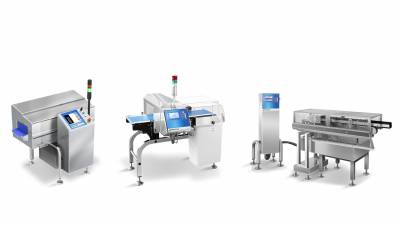
IPACK-IMA 2022: we are waiting for you at our stand!
We are waiting for you from 3 to 6 May with many new inspection and control technologies
Read more
PRISMA INDUSTRIALE present at EMAF Porto 2021
PRISMA INDUSTRIALE S.r.l. will be present at EMAF (Porto, Portugal, 1-4 December) at the stand of Albipack
Read more